 English


The quality of food packaging bags in the flexible packaging industry, especially their hygiene quality, directly affects the food safety of the packaged products. Therefore, it is essential to have a management system that ensures the raw materials and additives used meet quality requirements. It is necessary to establish and strictly enforce industry and national standards for packaging films and bags, strengthen the inspection and supervision of food packaging, prevent substandard food packaging from entering the market, and strengthen management to ensure the healthy development of the flexible packaging industry.
The inspection items for single-layer food packaging bags are mainly divided into the following categories: Appearance: There should be no defects that hinder use, such as bubbles, perforations, watermarks, ridges, poor plasticization, fish-eye defects, or stiff lumps.
Specifications, width, length, and thickness deviations should all be within the specified range.
Physical and mechanical properties include tensile strength and elongation at break, which reflect the product's ability to stretch during use. If this is substandard, the food packaging bag is prone to breakage and damage during use.
Hygienic properties: Includes evaporation residue (acetic acid, ethanol, n-hexane), potassium permanganate consumption, heavy metals, and decolorization test. Evaporation residue reflects the likelihood of food packaging bags releasing residues and heavy metals when exposed to liquids such as vinegar, wine, and oil during use. These residues and heavy metals can adversely affect human health and directly impact the color, aroma, and taste of food.

Degradation Performance: Based on the type of degradation, products can be categorized as photodegradable, biodegradable, and environmentally degradable. Degradation performance reflects the product's ability to be accepted by the environment after disposal. Good degradation performance allows the bag to break down, differentiate, and degrade under the combined action of light and microorganisms, eventually becoming fragments that are accepted by the natural environment. Poor degradation performance prevents environmental acceptance, resulting in "white pollution."
Inspection items for food packaging composite film bags mainly fall into the following categories: The appearance should be flat, free from scratches, burns, bubbles, oil breaks, and wrinkles. The heat seal should be smooth and without gaps. The film should be free from cracks, pores, and separation of the composite layers. It should be free from impurities, foreign matter, and oil stains.
The soaking solution in the bag should be free from any off-odors, foul smells, turbidity, and discoloration. It should be noted that in addition to the aforementioned hygiene standards, my country has two other laws and regulations governing food packaging materials: the *Food Hygiene Law of the People's Republic of China* and the *Administrative Measures for Plastic Products and Raw Materials for Food Use*.
The Food Hygiene Law is more comprehensive than the Administrative Measures, being a more specialized law. The latter, however, focuses solely on plastic products and raw materials, limiting its scope to various plastic utensils, containers, production pipelines, conveyor belts, and packaging materials made of plastic that come into contact with food, as well as the synthetic resins and additives used in their production. Plastic utensils refer to items like spoons, ladles, and chopsticks that come into short-term contact with food but are intended for repeated use.
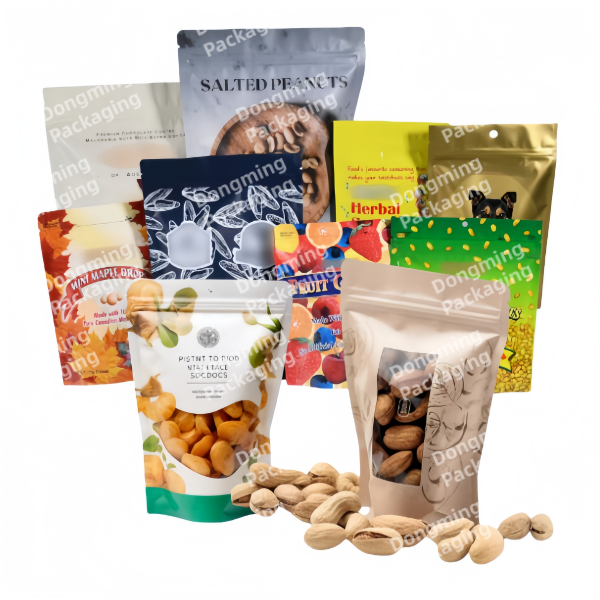
Containers refer to plastic products such as buckets, bottles, basins, and cups used to hold food. Production pipelines refer to pipelines through which materials, especially liquid foods or beverages, flow during food processing, and should also include storage containers. Conveyor belts are carriers that transport food raw materials to processing equipment, while packaging materials refer to single-piece and composite bottles, buckets, trays, roll films, and bags, including roll films for food preservation, sealing films, and bag-making films. All manufacturers of food flexible packaging and composite packaging materials should strictly implement this management method.